Governor-elect Acton Builds Her Team: What to Watch |
|
|---|
|
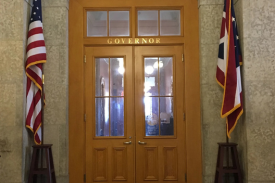 |
Governor-elect Amy Acton has begun assembling her administration ahead of her January 11 inauguration. Early personnel decisions will offer the first clear signal of her governing priorities. Acton tapped John Haseley, former chief of staff to Gov. Ted Strickland, to lead the transition. Haseley managed Strickland’s 2006 campaign and gubernatorial transition, which makes him a veteran of the process. The transition team launched www.GovElectActon.com to collect applications for administration posts and public input on policy priorities. Among Acton's first personnel priorities will be selecting her inner circle, including a chief of staff, policy director, legislative director and chief legal counsel. These individuals will help shape her early agenda, manage relationships with the legislature, and coordinate the transition across state agencies. The most consequential cabinet pick may be the director of the Office of Budget and Management. Acton’s first biennial budget is due March 15, about nine weeks after she takes office. Leadership at the Department of Medicaid will also matter, given the agency’s large share of state spending. Democratic legislators, legislative staff and newly recruited personnel from Democrat-led cities and counties are expected to fill many roles. The Governor-elect may also choose to retain a handful of Governor DeWine's cabinet directors, at least temporarily, to ensure continuity during the transition. Having served as DeWine's director of health, Acton knows and has worked with many members of the current administration. That familiarity could give her comfort in retaining certain officials while she evaluates longer-term appointments. |
|
|---|
|
 Building an administration and preparing the state budget at the same time is hard. Hundreds of staffing and policy decisions need to be made in a matter of weeks. Personnel announcements will tell us a lot about Acton's priorities before the budget does. For organizations doing business with state government, the coming weeks will be an important time to monitor appointments, establish relationships with incoming officials and assess how the new administration's priorities may reshape state policy and spending. |
|
|---|
|
Utility Leaders See Window for Energy Reform |
|
|---|
|
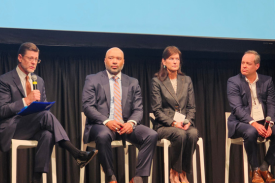
Ohio’s electric utilities see the new Acton administration as a chance to reset state energy policy as rising costs, surging demand, and affordability pressures are pushing the issue up the agenda. Hicks Partners’ Brian Hicks recently moderated a utility executive panel at the Ohio Chamber of Commerce’s 2026 IMPACT Ohio Post-General Conference. Leaders from AEP Ohio, Duke Energy and FirstEnergy said they look forward to working with Governor-elect Acton and the incoming General Assembly on a comprehensive energy strategy, one that supports economic development while keeping power affordable and reliable. The panel described the scale of the problem: - AEP Ohio’s peak demand, now 10 gigawatts, is expected to double by 2030;
- Major infrastructure projects face three-year equipment lead times;
- Construction costs are 30% to 40% higher than six years ago; and
- Generation makes up about 60% of the typical electric bill.
Panelists called for more in-state generation and faster approvals, including reforms to Ohio’s lengthy permitting and right-of-way processes. |
|
|---|
|
 The next administration faces a hard balancing act. Data centers and major industrial expansions are driving Ohio’s economic opportunities, but the state’s generation shortfall, rising infrastructure costs and slow permitting must be solved without pushing costs onto households and businesses. Watch for new energy legislation and siting-reform proposals when the new General Assembly convenes in January. |
|
|---|
|
| Lawmakers Return for Lame Duck as Final Weeks Narrow Path for Pending Bills |
|
|---|
|
 |
Ohio lawmakers return to Columbus this week with five regular voting sessions on the calendar before the 136th General Assembly adjourns in December. A new administration takes office in January, so bills still in progress have little time left. Scheduled sessions: - November 10 and 18;
- December 2;
- December 9, if needed;
- December 16, the last scheduled voting day in both chambers; and
- December 17, Senate only, if needed.
Some of the bills we are watching: - HB 21: enacts the Health Care Sharing Ministries Freedom to Share Act; passed the House, pending in Senate Financial Institutions, Insurance and Technology Committee;
- HB 253: creates licensure for advanced practice respiratory therapists; passed the House in November 2025, pending in Senate Health Committee;
- HB 426/HB 480: provisions on unclaimed digital assets, including cryptocurrency, were amended into HB 480, previously an unclaimed funds bill, on November 9;
- HB 750: directs the Department of Aging to recruit PACE senior care providers in unserved counties; cleared House Health Committee in June, awaits a House floor vote; and
- SB 35: establishes supported decision-making as an alternative to guardianship for adults with developmental disabilities; passed the Senate, pending in House Children and Human Services Committee.
Three of the five have cleared their chamber of origin. HB 750 still needs a House vote, which leaves it most at the mercy of the calendar. |
|
|---|
|
 : Lame duck favors bills that are already moving, and the bills that carry other proposals. HB 426’s move into HB 480 shows how a bill stuck in committee can come back to life by riding on another one. Expect more of this. With only five scheduled voting days, a bill still in committee at Thanksgiving faces an uphill battle. |
|
|---|
|
Access our curated list of federal grants, including the EPA Diesel Emissions Reduction Act National Program (up to $12 million) and the DOJ Justice Reinvestment Initiative: Strengthening State and Local Operations to Reduce Crime and Recidivism (up to $4 million). |
|
|---|
|
| |
|